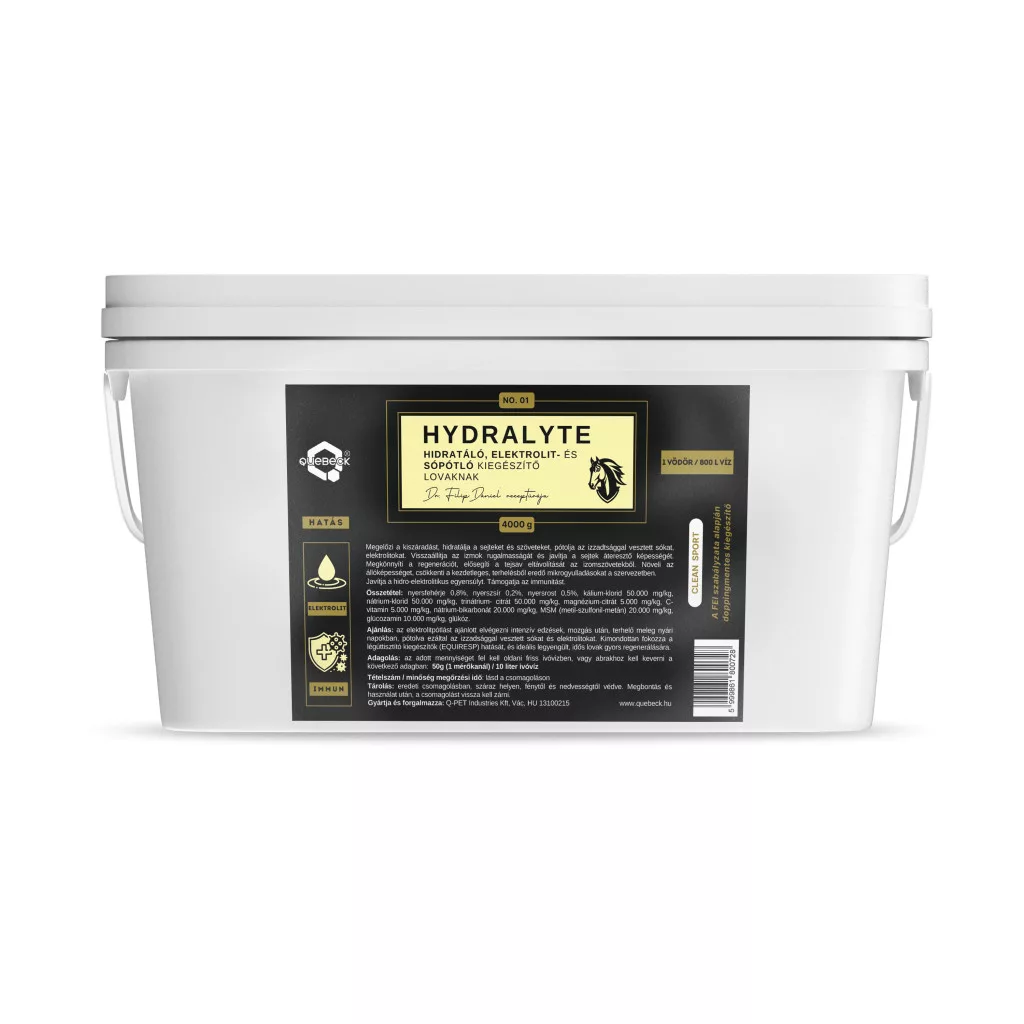
When developing HYDRALYTE, we took into account all the muscle- and cellular-level physiological processes that occur in a horse’s body after intensive work and sweating.
Thanks to its wide-ranging effects, HYDRALYTE helps support recovery processes and can shorten regeneration time, allowing horses to return to optimal condition faster.
What happens during intense workload?
(training, competition, long-distance riding, etc.)
- Energy stores are depleted, anaerobic (low-oxygen) metabolism increases, lactic acid accumulates, and signs of fatigue appear. In some cases, muscle stiffness or soreness (“muscle soreness”) may develop.
- Through sweating, the horse loses sodium, potassium, chloride, calcium and magnesium. A deficiency of these electrolytes can lead to muscle cramps and fatigue.
- Dehydration reduces water content inside cells, negatively affecting metabolism as well as oxygen and nutrient delivery.
- Intense movement causes micro-damage in muscle fibers, especially during eccentric contractions (when muscles lengthen under tension). These trigger inflammatory processes that the body must resolve through regeneration.
- During heavy exercise, circulation and oxygen transport change: blood flow is redirected toward muscles to supply oxygen and nutrients, while hemoglobin and myoglobin work at increased capacity.
- Muscle activity generates heat. Most heat is released through sweating and increased circulation, but if cooling is insufficient, heat stress can develop—especially dangerous in hot summer conditions.
When do we recommend giving HYDRALYTE?
- due to the horse’s large muscle mass and high energy use, HYDRALYTE should be an essential supplement for every horse owner
- regardless of workload level, at least once weekly for general regeneration and electrolyte replacement
- for intensively worked horses (training, work, competition), after every workload
- during heatwaves or damp, cold weather, together with a respiratory-support supplement (EQUIRESP®)
- as a supportive addition alongside medical treatments
- for senior or weakened horses
- for mares after foaling
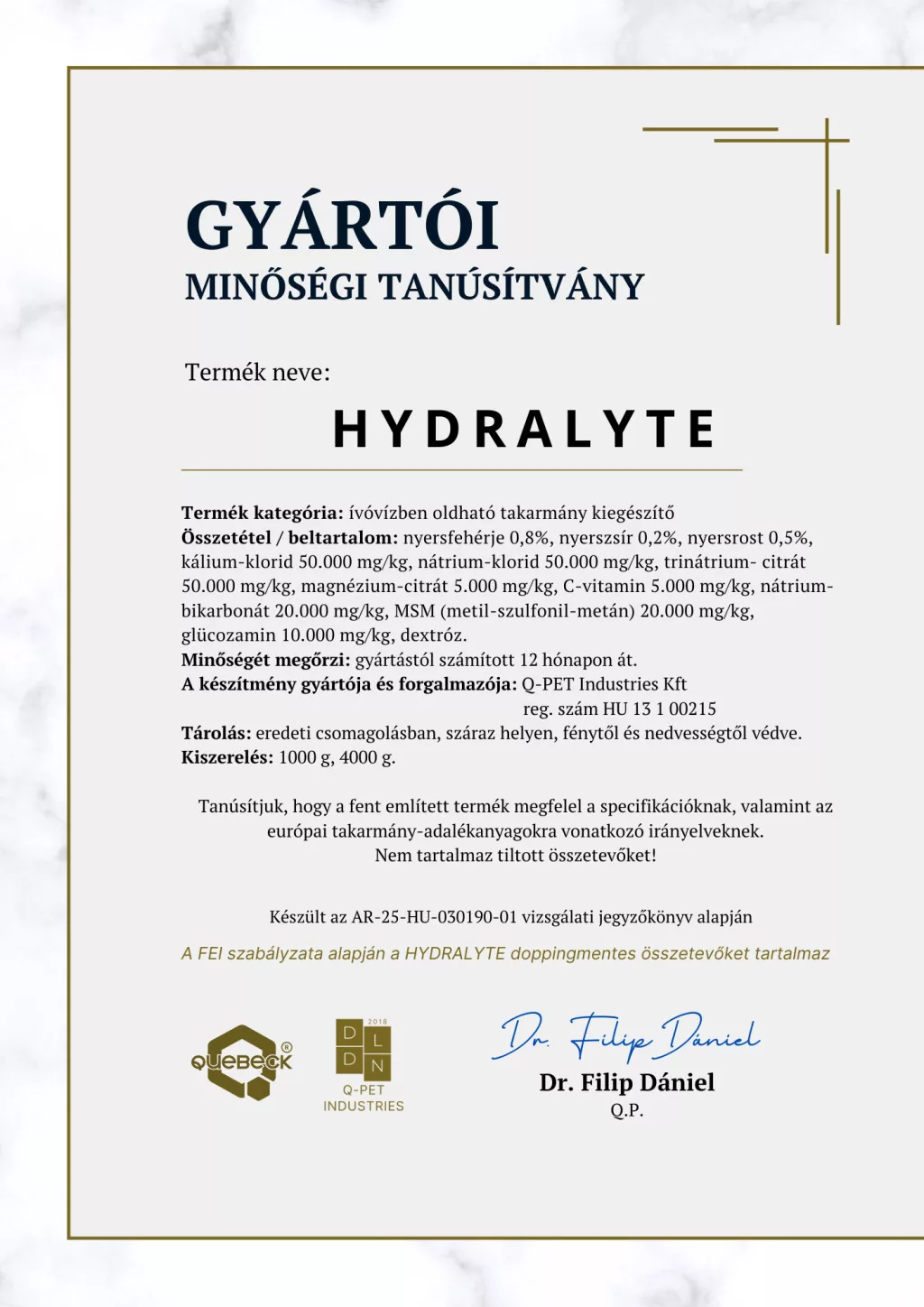
Analytical Constituents (per kg)
- Potassium chloride: 50,000 mg
- Sodium chloride: 50,000 mg
- Trisodium citrate: 50,000 mg
- Magnesium citrate: 5,000 mg
- Vitamin C: 5,000 mg
- Sodium bicarbonate: 20,000 mg
- MSM: 20,000 mg
- Glucosamine: 10,000 mg
- Glucose
Feeding Instructions
- After intensive exercise:
Dissolve 50 g (1 scoop) in 10 liters of fresh drinking water, once daily
- Daily maintenance:
Dissolve 20–25 g (½ scoop) in fresh drinking water